
Finding a dependable acupressure stimulation patch supplier is an important step for medical product distributors, rehabilitation providers, healthcare retailers, and private-label brands. The right partner can help you balance product consistency, skin comfort, regulatory requirements, packaging flexibility, and dependable delivery.
This practical guide explains how to assess patch design, manufacturing quality, supplier capabilities, and purchasing costs before placing a bulk order.

1. Understanding Acupressure Stimulation Patches
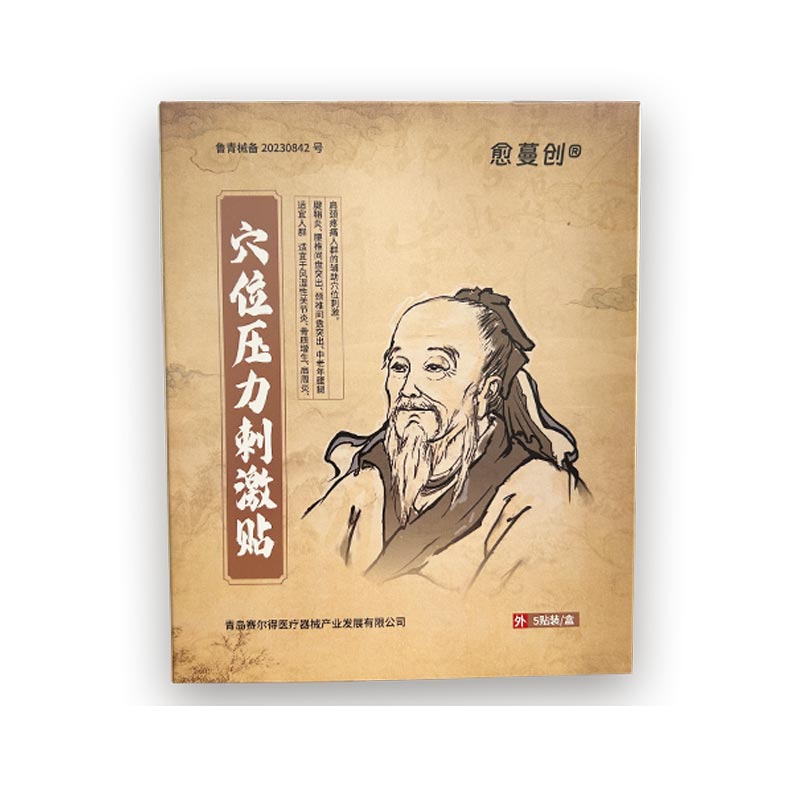
An acupressure stimulation patch is an externally applied product designed to provide localized pressure or mechanical stimulation to a selected area of the body. Depending on its construction, the patch may use a raised pressure element, a specialized contact surface, or another physical structure to deliver stimulation while remaining attached to the skin.
Unlike products that rely primarily on a medicinal ingredient absorbed through the skin, a physical acupressure patch is intended to work through contact and pressure. Product construction varies, however, and buyers should verify the design, intended purpose, and actual mechanism of each item rather than assuming that all patches work in the same way.
How the Product Is Designed to Work
The patch is positioned over a designated area or acupoint. Its pressure element makes contact with the skin, creating localized stimulation during wear. Comfort depends on the contact surface, pressure intensity, patch dimensions, adhesive performance, and anatomical location.
These factors matter commercially because a patch that is uncomfortable, difficult to position, or prone to detachment may generate complaints even when its basic construction is sound.
2. Why Supplier Selection Matters
For distributors and importers, sourcing is not simply a matter of finding the lowest unit price. Product consistency, documentation, packaging accuracy, delivery planning, and communication all influence the cost and reliability of a healthcare product business.
Common Problems Buyers Encounter
- Inconsistent product quality: Differences in adhesive performance, pressure components, or material dimensions can lead to uneven user experiences between batches.
- Insufficient documentation: Missing product specifications or unclear regulatory status may delay product registration, customs clearance, or market launch.
- Uncomfortable application: Poorly selected backing materials or excessive localized pressure can affect wearability and customer satisfaction.
- Unreliable delivery: Unclear production schedules can create stock shortages, missed promotions, and unnecessary inventory costs.
- Limited customization: Standard packaging or inflexible specifications may not suit a distributor's brand identity or sales channel.
A capable China Acupressure Stimulation Patch Supplier should help buyers address these risks through clear specifications, verifiable records, defined inspection procedures, and realistic production commitments.
What a Reliable Partnership Should Deliver
Look for transparent communication, a documented quality process, consistent samples, clearly defined order terms, and an appropriate level of technical support. These fundamentals are more useful than broad promises of superior quality without supporting details.
3. Key Product Features to Evaluate Before Buying
Product performance starts with design decisions. Before requesting a quotation, establish the requirements that matter most to your target users and intended distribution market.
| Feature | What to Check | Why It Matters |
|---|---|---|
| Backing material | Composition, flexibility, breathability, and skin-contact suitability | Influences comfort and fit during wear |
| Pressure element | Shape, dimensions, edge finish, placement, and consistency | Helps achieve predictable physical contact |
| Adhesive | Adhesion, removal behavior, residue, and skin compatibility data | Reduces lifting, detachment, and removal complaints |
| Patch dimensions | Length, width, shape, and tolerance | Supports positioning and application requirements |
| Protective liner | Ease of peeling, release performance, and cleanliness | Makes application easier and protects the adhesive |
| Packaging | Seal integrity, instructions, batch identification, and shelf-life information | Supports storage, traceability, and distribution |
Comfort and Adhesion Must Be Evaluated Together
Strong adhesion is not automatically better. A patch must remain attached under its intended conditions while still allowing appropriate removal. Likewise, a soft backing does not guarantee skin compatibility, and a raised pressure component that works well on one body area may not suit another.
Request samples for evaluation under the intended conditions of use. Check placement, removal, edge lifting, wear comfort, and consistency across several samples. For skin-contact products, review relevant biocompatibility or irritation assessment documentation where applicable.
Packaging Is Part of the Product Specification
Individual pouches, multi-piece packs, retail cartons, and bulk packaging serve different distribution needs. Packaging requirements should be confirmed early, particularly when the product will be sold under a private label or distributed in a regulated market.
4. Quality Control and Documentation to Request
Medical and healthcare product buyers need more than a visual inspection. They should understand how the supplier identifies materials, controls manufacturing, evaluates finished products, and manages problems when a batch fails to meet requirements.
Essential Quality Questions
- Are incoming materials checked against approved specifications?
- Are product dimensions and pressure-element placement inspected?
- How is adhesive performance assessed against the product's intended wear conditions?
- Are finished goods inspected for visible defects, packaging integrity, and correct labeling?
- Can the supplier trace finished batches to production and material records?
- Is there a documented process for handling complaints, nonconforming products, and corrective actions?
Documents Worth Reviewing
Depending on the product classification and destination market, request relevant items from the following list:
- Product specifications and approved sample records.
- Applicable manufacturing licenses and product registration information.
- Quality management system certificates, where applicable.
- Material declarations and relevant skin-contact safety assessment reports.
- Batch inspection records, traceability details, and packaging specifications.
- Instructions for use, storage conditions, and shelf-life support.
- Applicable conformity documents and market-specific regulatory information.
For products marketed as medical devices, the buyer should confirm the applicable classification and legal requirements in the destination country. A document that is sufficient for one market may not be sufficient for another.
5. Matching Product Design to User Needs
Not every buyer serves the same audience. Rehabilitation suppliers, pharmacies, wellness retailers, and healthcare distributors may need different packaging formats, product information, and application instructions.
Potential Distribution Settings
- Rehabilitation and physical care: Products may be considered as part of a broader care offering when appropriate to their intended purpose.
- Healthcare retail: Clear packaging, accessible instructions, and easy product identification can support retail operations.
- Wellness distribution: Buyers may prioritize convenient application, portability, and understandable product descriptions.
- Professional supply channels: Documentation, batch traceability, and standardized ordering may be especially important.
- Private-label businesses: Consistent specifications, brand presentation, and repeat-order controls help protect the customer experience.
Build a Clear Product Brief
Before contacting suppliers, define the intended users, application areas, design requirements, preferred materials, packaging format, target market, and estimated order volume. This helps manufacturers respond with a relevant quotation instead of a generic price.
Do not assume that the product is appropriate for every age group, body area, or health condition. Suitability should follow the manufacturer's instructions, available safety information, and applicable professional advice.
6. How to Evaluate a China Acupressure Stimulation Patch Supplier
China offers a broad manufacturing base for healthcare products, but supplier capabilities differ. A structured evaluation helps separate a suitable long-term manufacturing partner from a seller that cannot consistently meet your requirements.
Assess These Five Areas
Questions to Ask During Supplier Discussions
- Which product specifications can you provide before sampling?
- Can you supply the applicable licenses and documentation for our target market?
- How do you control differences between sample approval and mass production?
- What are your standard and customized packaging options?
- How are order quantities, delivery dates, and inspection criteria confirmed?
- What happens if delivered goods do not match the agreed specification?
Where possible, compare suppliers using the same product brief and evaluation criteria. This creates a more meaningful comparison than collecting quotations with different assumptions.
7. OEM, ODM, and Private-Label Opportunities
OEM and private-label arrangements allow distributors to develop a consistent product identity without necessarily building their own manufacturing operation. ODM projects may involve additional development work based on a manufacturer's existing capabilities.
| Service Type | Typical Scope | Best Suited For |
|---|---|---|
| Standard supply | Existing product and standard packaging | Buyers who want a straightforward purchasing process |
| OEM / private label | Customer branding and agreed packaging specifications | Distributors developing their own brand |
| ODM / customized development | Agreed modifications to design, dimensions, materials, or presentation | Businesses with differentiated product requirements |
Define Customization Before Production
Customization may involve printed cartons, product labels, individual sachets, instruction leaflets, pack quantities, or selected product dimensions. Not every manufacturer can accommodate every modification, and some changes may affect tooling costs, minimum order quantities, validation, and delivery time.
For each project, agree on:
- Final product drawings, dimensions, materials, and approved sample.
- Brand assets, artwork format, language, and labeling requirements.
- Ownership and permitted use of artwork, tooling, and other project assets.
- Quality acceptance criteria and the process for approving changes.
- Minimum order quantity, development charges, and repeat-order conditions.
Any change that could affect safety, intended use, or regulatory status should be reviewed before implementation. Branding should never imply an authorization, therapeutic effect, or certification that the product does not have.
8. Understanding Pricing and Total Purchasing Costs
Unit price is important, but it does not represent the full cost of sourcing a patch. Buyers should account for all expenses required to obtain, approve, import, store, and distribute a compliant product.
Factors That Affect the Quotation
- Patch dimensions, construction, and selected materials.
- Adhesive system and required product testing.
- Order volume and production efficiency.
- Individual packaging, retail cartons, and printed instructions.
- Customization, artwork preparation, and tooling requirements.
- Inspection arrangements, freight, duties, and applicable taxes.
- Regulatory documentation and market-specific compliance work.
Compare Quotations on the Same Basis
Request itemized quotations that clearly identify the product specification, quantity, packaging, included services, lead time, payment terms, and shipping basis. Ask suppliers to separate one-time development charges from recurring production costs.
Forecast demand realistically. An oversized first order can tie up cash and increase inventory risk, while very small repeated orders may raise per-unit costs. A trial order, where available, can help buyers assess consistency before committing to larger volumes.
9. A Step-by-Step Purchasing Process
A defined sourcing process helps prevent misunderstandings and makes repeat orders easier to manage.
Keeping a record of the approved sample and specification is particularly valuable for repeat purchases. It creates a reference point when materials, suppliers, packaging, or production processes change.
10. Common Sourcing Mistakes and How to Avoid Them
Mistake 1: Choosing a Supplier Based on Price Alone
A low price does not prove that a supplier can meet the required specification. Evaluate product consistency, documentation, communication, and total landed cost alongside the quotation.
Mistake 2: Approving Samples Without Written Specifications
A sample is only useful as a production reference when its key characteristics are recorded. Document the materials, dimensions, adhesive requirements, packaging, and acceptance criteria before bulk production.
Mistake 3: Assuming All Patches Have the Same Intended Use
Physical acupressure patches, herbal patches, and medicinal transdermal patches can have different mechanisms, ingredients, classifications, and regulatory obligations. Confirm the exact product type rather than relying on a broad product name.
Mistake 4: Overlooking Labeling and Import Requirements
Language, warnings, manufacturer details, traceability information, and product claims may be regulated. Confirm these requirements before approving artwork or arranging shipment.
Mistake 5: Failing to Agree on a Defect-Handling Process
Before ordering, establish how discrepancies will be reported, documented, investigated, and resolved. Include clear timelines and responsibilities in the purchase agreement where appropriate.
11. Safe Use and Responsible Product Claims
Product safety should remain central to sourcing and marketing decisions. A patch that contacts the skin should be evaluated for its intended application, material compatibility, instructions for use, and foreseeable misuse.
Important Considerations for Users
- Follow the product-specific instructions and recommended wear duration.
- Apply only to the areas specified by the manufacturer.
- Do not apply to broken, irritated, or otherwise unsuitable skin unless the product instructions and an appropriate healthcare professional specifically support its use.
- Stop using the product if significant irritation, swelling, persistent discomfort, or another unexpected reaction occurs.
- Seek professional advice when symptoms are severe, persistent, unexplained, or worsening.
- Keep the product away from children unless its intended use and supervision requirements have been established.
Keep Marketing Claims Evidence-Based
Descriptions should accurately reflect the product's verified design, intended purpose, and available evidence. Avoid unsupported promises to cure diseases, repair structural damage, eliminate pain, or guarantee a clinical outcome.
Traditional acupressure concepts and user testimonials do not, by themselves, establish that a specific product treats a medical condition. Claims about effectiveness should be supported by appropriate evidence and permitted under the regulations of the intended market.
This article provides general product-sourcing information and is not a substitute for medical advice, product-specific instructions, or regulatory review.
12. Working with Qingdao SAILDAR Medical Device Industry Development Co., Ltd.
For businesses exploring an acupressure stimulation patch supplier in China, Qingdao SAILDAR Medical Device Industry Development Co., Ltd. offers a relevant starting point for discussing product specifications, sourcing requirements, and supply arrangements.
When evaluating a potential cooperation with SAILDAR, buyers can begin by clarifying the intended product, target market, required documentation, packaging preferences, and estimated purchasing volume. These details help establish whether the available product configuration and manufacturing arrangements match the project requirements.
Topics to Discuss with the Supplier
- Product specifications: Confirm the construction, dimensions, materials, application instructions, and intended purpose of the proposed patch.
- Documentation: Request the applicable registration, licensing, quality, and product safety information for verification.
- Sample evaluation: Discuss sample availability and how the approved product will be used as a reference for production.
- Packaging requirements: Explain whether standard packaging, customized cartons, or private-label presentation is needed.
- Order planning: Request current minimum order quantities, production lead times, quotation terms, and shipping options.
A productive supplier relationship starts with specific questions and transparent expectations. Buyers should independently verify all relevant certifications, product claims, and market approvals before making a purchasing decision.
13. Frequently Asked Questions
What is a China acupressure stimulation patch supplier?
It is a Chinese manufacturer or supplier that provides acupressure stimulation patches for wholesale, distribution, or other business applications. Depending on its capabilities, a supplier may offer standard products, customized packaging, private-label arrangements, or additional product development services.
What should buyers check before placing a bulk order?
Review the product specification, sample quality, applicable documentation, manufacturing and inspection procedures, packaging details, minimum order quantity, delivery schedule, and written acceptance criteria. Confirm the product's regulatory status in the destination market.
Can acupressure stimulation patches be customized?
Customization depends on the manufacturer's capabilities and the product design. Potential options may include patch dimensions, selected materials, packaging, labeling, and brand presentation. Confirm technical feasibility, minimum quantities, costs, and any required validation before approving changes.
How can buyers assess patch quality?
Inspect samples against a written specification. Evaluate material finish, dimensions, pressure-element consistency, adhesion, ease of application and removal, packaging integrity, and available safety documentation. Ask how the manufacturer controls production batches and manages nonconforming products.
Which documents should an importer request?
Depending on the product and destination market, relevant documents may include product specifications, manufacturing licenses, registration information, applicable quality certificates, material safety assessments, inspection records, labeling details, and instructions for use. Requirements differ by jurisdiction, so verify the exact obligations before importing.
Are acupressure patches the same as medicinal pain-relief patches?
No. A physical acupressure patch is designed to provide localized mechanical stimulation, whereas a medicinal patch may deliver an active ingredient. Some products combine different features. Confirm the actual construction, ingredients, intended purpose, and regulatory classification of the product being purchased.
How can businesses compare supplier quotations fairly?
Send each supplier the same product brief and compare prices on an equivalent basis. Include quantity, material specifications, packaging, customization charges, inspection requirements, lead times, shipping terms, and other applicable costs. A lower unit price is not necessarily the lowest overall purchasing cost.
How long does production take after an order is placed?
Lead time depends on product availability, order quantity, customization, material supply, artwork approval, and production scheduling. Request a written timeline covering sample approval, production, inspection, and shipment rather than relying on an assumed standard delivery period.
Can a supplier guarantee that the patch will relieve pain?
No supplier should promise a guaranteed clinical outcome without appropriate evidence and a lawful basis for the claim. Product effects vary with the design, intended use, individual circumstances, and supporting evidence. Review product-specific information and avoid treating general marketing statements as proof of medical effectiveness.
Why consider Qingdao SAILDAR Medical Device Industry Development Co., Ltd.?
SAILDAR is a potential supplier to contact when researching acupressure stimulation patch sourcing in China. Ask the company for current product specifications, applicable documentation, sample arrangements, customization options, and commercial terms so that you can assess its suitability for your business.
Conclusion: Make Supplier Reliability Part of Your Product Strategy
Choosing a China Acupressure Stimulation Patch Supplier involves more than comparing quotations. Buyers should evaluate product design, material suitability, pressure consistency, adhesive performance, quality documentation, regulatory obligations, customization capabilities, and supply reliability as parts of one purchasing decision.
A structured process—beginning with a clear specification, continuing through sample evaluation and document verification, and ending with defined inspection and delivery arrangements—helps reduce avoidable sourcing risks. It also creates a stronger foundation for repeat orders and long-term customer satisfaction.
For distributors, importers, and private-label brands, the next step is to communicate your requirements clearly and request information that can be verified. This allows you to compare suppliers objectively and select a partner whose product and service capabilities align with your business goals.
Looking for an Acupressure Stimulation Patch Supplier in China?
Qingdao SAILDAR Medical Device Industry Development Co., Ltd. welcomes inquiries from businesses interested in acupressure stimulation patch sourcing and potential cooperation.
Share your target market, product specifications, estimated order quantity, packaging requirements, and documentation needs to start a practical discussion about your project.
Ready to discuss your sourcing requirements? Contact us to request product information, explore available options, and learn more about the purchasing process.
Explore Acupressure Stimulation Patch